Pure sequence first
Sort for the cheapest pure sequence in your first 30 seconds. Without it, you cannot declare — no matter what else goes right.
Strategy changes some inputs (drop timing, discard reads, deadwood control) but cannot change the inputs that matter most (closed-deck order, hidden opponent holdings, joker placement).

Five habits worth building. None of them are guaranteed wins.

Sort for the cheapest pure sequence in your first 30 seconds. Without it, you cannot declare — no matter what else goes right.
Note what others refuse. Repeated high-card refusals from one suit signal someone collecting that suit.
When pure shape dies and high deadwood remains, an early drop usually costs less than fighting to the show.
Verify set cards are different suits before declaring. Duplicate suits invalidate the set on most tables.
Pre-set deposit, time and loss limits. Strategy that ignores bankroll is not strategy — it is optimism.
Five checks before pressing declare: sequences count, pure run confirmed, sets valid, jokers placed, deadwood sums correct.
The honest list. Most published "rummy systems" quietly pretend these inputs do not exist.
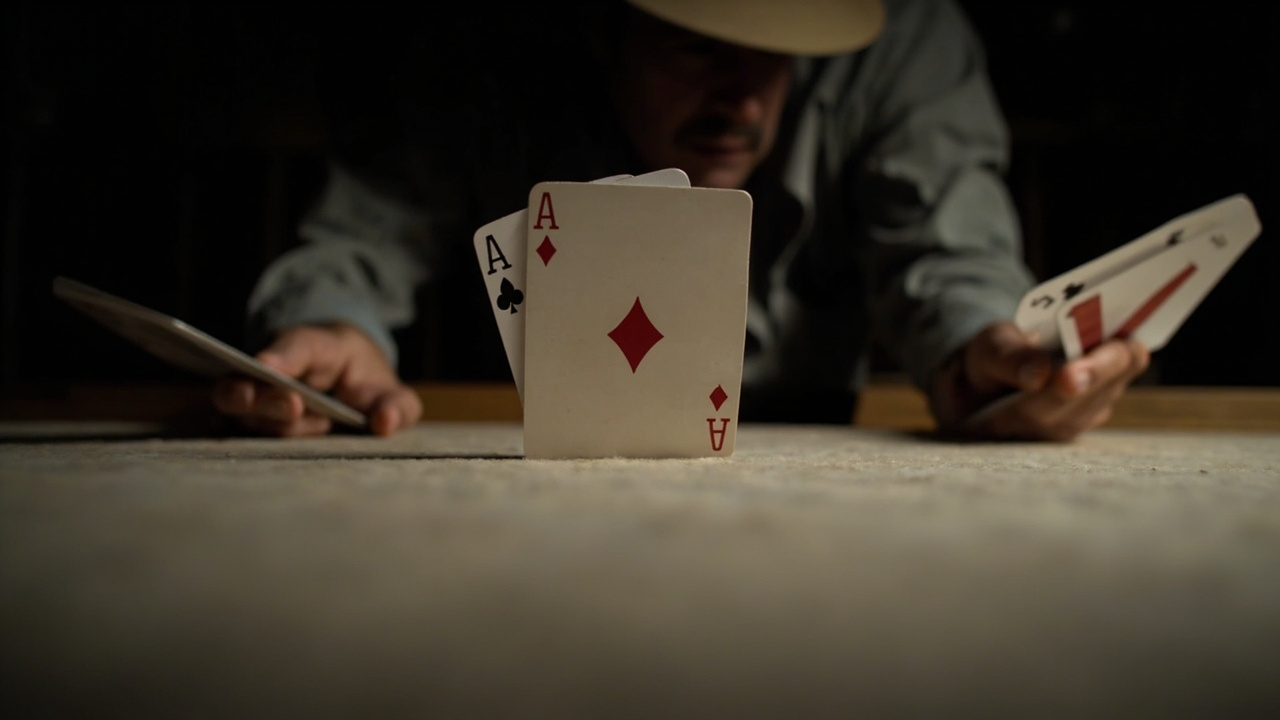
Closed-deck order: the cards you have not seen remain a probability distribution, not a known sequence. You cannot read them by reading the open pile.
Hidden opponent holdings: even excellent discard reads only narrow the probability that an opponent holds a particular card. Hidden cards remain hidden.
Joker placement: printed jokers are visible only on the open discard pile until drawn. A joker in someone else's hand is invisible to you until declared.
Multi-way table dynamics: rummy is rarely two-handed. The fourth and fifth players introduce social and probabilistic complexity that simple systems do not capture.
Future rule changes: operator-side updates can shift drop values, invalid-show penalties and stake bands without notice. Strategies built on yesterday's table card are outdated.
Drop thresholds depend on the table's drop values. There is no universal "drop after X turns".
| Drop type | When it applies | Cost consideration |
|---|---|---|
| First drop | Before your first turn ends | Cheapest on most tables; check the card |
| Middle drop | After several turns but before the show | Higher fixed cost; rising with turn count |
| Last-drop penalty | On the final turn window | Often close to full deadwood value |
For adults who want to study rummy seriously without losing perspective.
Most published rummy systems quietly pretend that closed-deck order and hidden opponent holdings are minor variables. They are not. They are the dominant variables. Strategy changes some inputs — drop timing, discard reads, deadwood control — but cannot change the inputs that matter most.
A system that promises consistent profit is marketing, not method. Adult readers who treat systems as entertainment frameworks rather than profit engines keep more of their bankroll and more of their sleep. The honest goal of strategy study is fewer unforced errors, not a guaranteed edge over the closed deck.
When a system claims a win rate, ask three questions: over how many hands, at what stakes, and with what selection bias in the sample. Most claims collapse under those three questions. The ones that survive still do not transfer cleanly to your table, your opponents and your emotional state on a Tuesday evening.
Drop timing is the highest-leverage trainable skill in Indian rummy because it is a decision you control completely. You cannot control the next card from the closed deck. You can control whether you stay in a hand whose pure path has died.
A workable heuristic for many adult readers is: if pure shape has stalled after several turns and high deadwood remains, take the available drop. The exact threshold depends on the table’s drop values. There is no universal “drop after X turns.” There is only the comparison between the fixed drop cost and the expected deadwood bill if someone else declares.
First drops are cheapest on most tables. Middle drops cost more. Last-drop penalties often approach full deadwood value. Adults who skip the first-drop window because the hand “feels close” regularly discover that the feeling was optimism, not evidence.
Open information reveals what opponents refuse. Closed information remains private. Discard reads narrow the probability distribution but do not eliminate uncertainty. Adults who treat a repeated high-card refusal as proof that a suit is “safe” regularly walk into a show that was always available.
A practical way to use discard reads is as a soft filter on your own discards, not as a hard claim about opponent holdings. If three players have refused hearts face cards, hearts face cards are slightly more dangerous to hold as deadwood. Slightly. Not certainly.
Multi-way tables (four or five seats) make discard reads noisier, not cleaner. More players mean more refusals that could be noise. Two-handed practice tables are useful for building the habit; they are not a faithful model of a five-seat cash table.
Week one: low-stake Points only. Track every drop decision in a private notebook: hand shape, deadwood estimate, drop value, why you stayed or left. Do not change formats.
Week two: same format, same stakes. Re-read the notebook. Circle the three decisions you would reverse. Practice the five-step declaration audit out loud before every show.
Week three: introduce Deals at the same stake band. Notice how cumulative pressure changes your drop timing. Keep the notebook. Keep the timer.
Week four: one Pool session with a hard session-time limit. Compare survival length against your pre-set timer. If you extended the timer mid-session, name that as a process failure in the notebook.
At the end of four weeks, you will not have beaten the closed deck. You will have a clearer picture of your own habits. That picture is the only sustainable edge available to adult recreational players.
No. Closed-deck order and hidden opponent holdings are uncertain. Treat any system claiming guaranteed profit as marketing, not method.
When pure shape has stalled after several turns and high deadwood remains. The exact threshold depends on the table drop value.
Partially. Open information reveals what opponents refuse; closed information remains private. Discard reads narrow the probability distribution but do not eliminate uncertainty.
No. Even with a strong initial 13 cards, draw order, joker placement and opponents’ decisions affect the outcome.
Strategic discipline often shows results across dozens of hands, not within a session. Treat short-term variance as noise, not signal.
Practice on low-stake Points tables with explicit session limits. Track drop decisions and deadwood patterns in a private notebook.
No. This is independent editorial work. The commercial CTA at the bottom uses a disclosed first-party redirect that may earn a commission.
No. Rules are verified against the operator screen and the publicly available rule strip. The CTA is unrelated to the technical accuracy of the content.
No. Stake ranges, drop values and invalid-show penalties change with each operator update. Always read the on-screen table card before joining.
Editorial notes are reviewed each quarter and updated whenever a relevant rule or product change is verified. Dates appear on the methods colophon.
The lobby shows the current stake bands and drop values. After studying the strategy limits, the next step is choosing a low-stake table where the rule strip is visible.
PLAY NOWDisclosed first-party route. Editorial notes are independent of the commercial relationship.